Urania
Stereoscopic 3D video
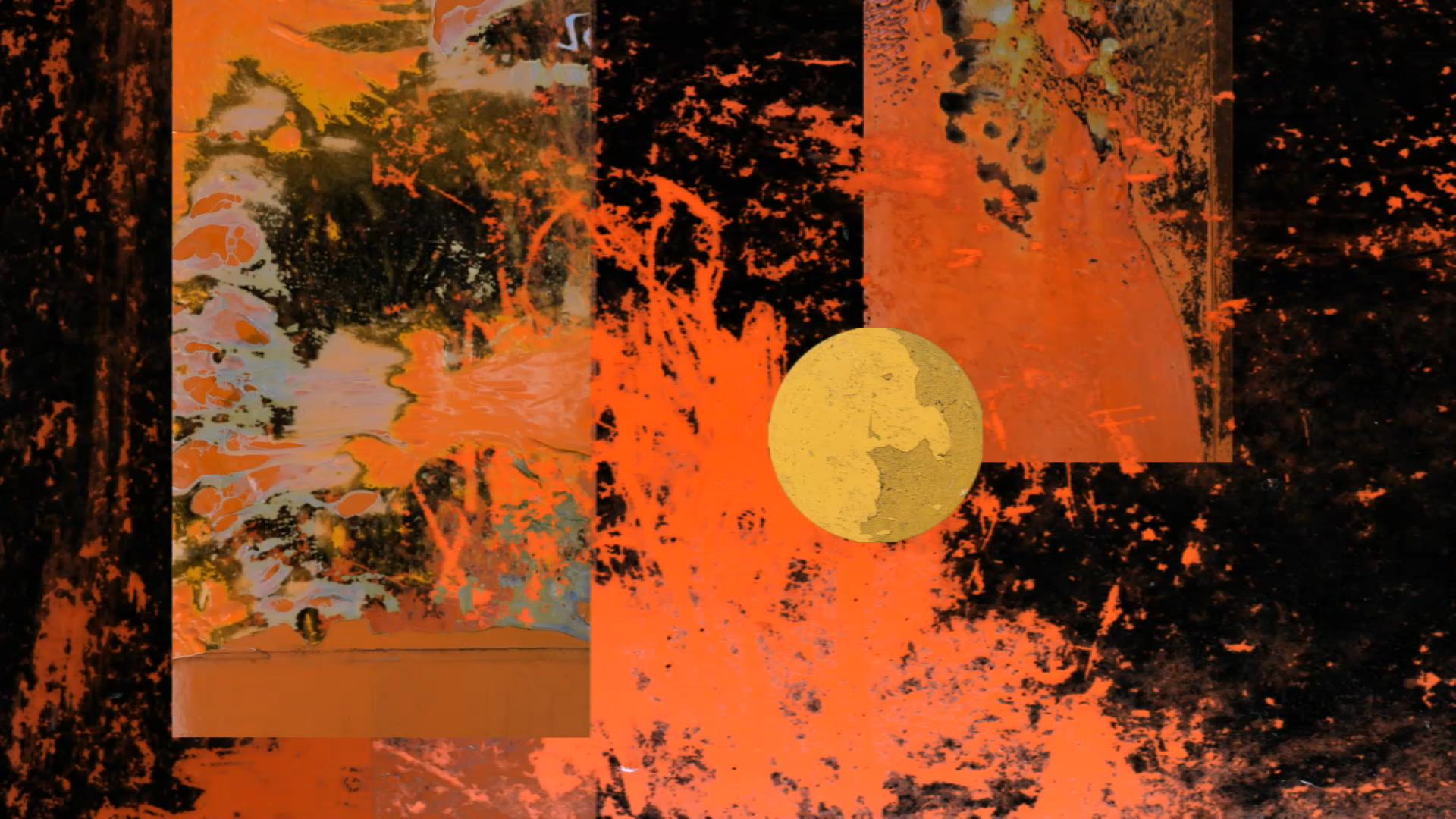
Based on the passacaglia concluding Johann Caspar Ferdinand Fischer's Musicalischer Parnassus (1738), Urania unfolds as a journey through imaginary cosmic landscapes, where astronomical space becomes a metaphor for inner perception.
Rather than depicting a physical universe, the work presents a succession of mental worlds inhabited by unreal planets, shifting horizons and impossible architectures. As in the other works of the Passacaille cycle, these environments are constructed from photographic fragments of the urban landscape, abstracted and transformed into textures, translucent forms and theatrical coulisses that gradually assemble an entirely new spatial reality.
The visual world evolves according to the same principle that governs Fischer's passacaglia. Repetition does not produce stasis but continuous transformation: familiar forms slowly dissolve into increasingly unfamiliar constellations, inviting the viewer to lose any stable point of reference. The stereoscopic image reinforces this sensation, allowing the spectator to perceive space not as a backdrop but as an immersive, living environment.
Conceived as the concluding work of the Passacaille cycle, Urania extends the project's investigation of repetition, variation and perception towards a cosmic dimension, where the journey through space ultimately becomes a journey through the imagination.